
“Mathletics makes teachers’ lives easier!” – How Bryn Awel Primary Kept Mathletics Through Budget Cuts
“We really, really do love Mathletics.”
Those words – spontaneous and genuine – came from Anna Jones, a Reception–Y1 teacher and maths leader at Bryn Awel Primary School in Rhymney, Wales. And throughout our conversation with Anna, those two words kept appearing together: “love” and “Mathletics.”
This sentiment extends beyond the staffroom. At this tight-knit primary school of just over 120 pupils, where staff “pride ourselves on being able to get to know every child and family individually,” Mathletics, our online maths program for ages 5–16, has transformed students’ attitudes toward mathematics in a way that every teacher strives for: children have gone from saying “ugh, we’ve got maths” to “we love maths!”
When budget pressures forced the school to make difficult decisions about which resources to keep, the choice was “a no-brainer”: Mathletics was simply too precious to lose.
Letting it go at a point where it had been reducing teacher workload and maintaining high levels of engagement among students seemed impossible. So it stayed – and months later, we’re here talking to Anna about its impact on Bryn Awel Primary.
The challenge: Tackling tight budgets and plummeting parent engagement
Like many schools across the UK, Bryn Awel Primary operates in a context where every pound counts. Serving a deprived area with very high numbers of free school meals, the school works hard on parent engagement, trying to bridge the gap between what happens in the classroom and what happens at home.
This had been a challenge before Mathletics. Physical resources were problematic: reading books would go home but wouldn’t always come back, and the cost of replacing them was a burden both for the school and for families. More fundamentally, Anna and her colleagues knew that
“children need to do more to remember more, and that extra practice they’re having at home to reinforce what we’ve been doing in school has made all the difference, really.”
For a time, the school used both Reading Eggs and Mathletics, accessing them via the 3 Essentials dashboard, a single sign-on solution that made it easy for staff and students to use both programs through one integrated platform. “That dashboard where you can have one login now [to 3 Essentials] is such a good feature,” Anna recalls.
Then came the budget crunch that many school leaders will recognise all too well.
Something had to give, when a new phonics scheme was introduced across the school. The budget simply couldn’t stretch to cover both Reading Eggs and Mathletics. As maths leader, Anna knew Mathletics inside and out. The team loved it, could see the tangible benefits in student engagement and teacher workload and appreciated the clear progress tracking it provided.
Challenging times demand tough decisions. Between the two programs, the school chose to keep Mathletics, which continued doing what it did best: boosting student engagement and progress while making teachers’ lives easier.
Weekly celebrations and the Mathlete of the week: Bryn Awel’s model approach to engagement
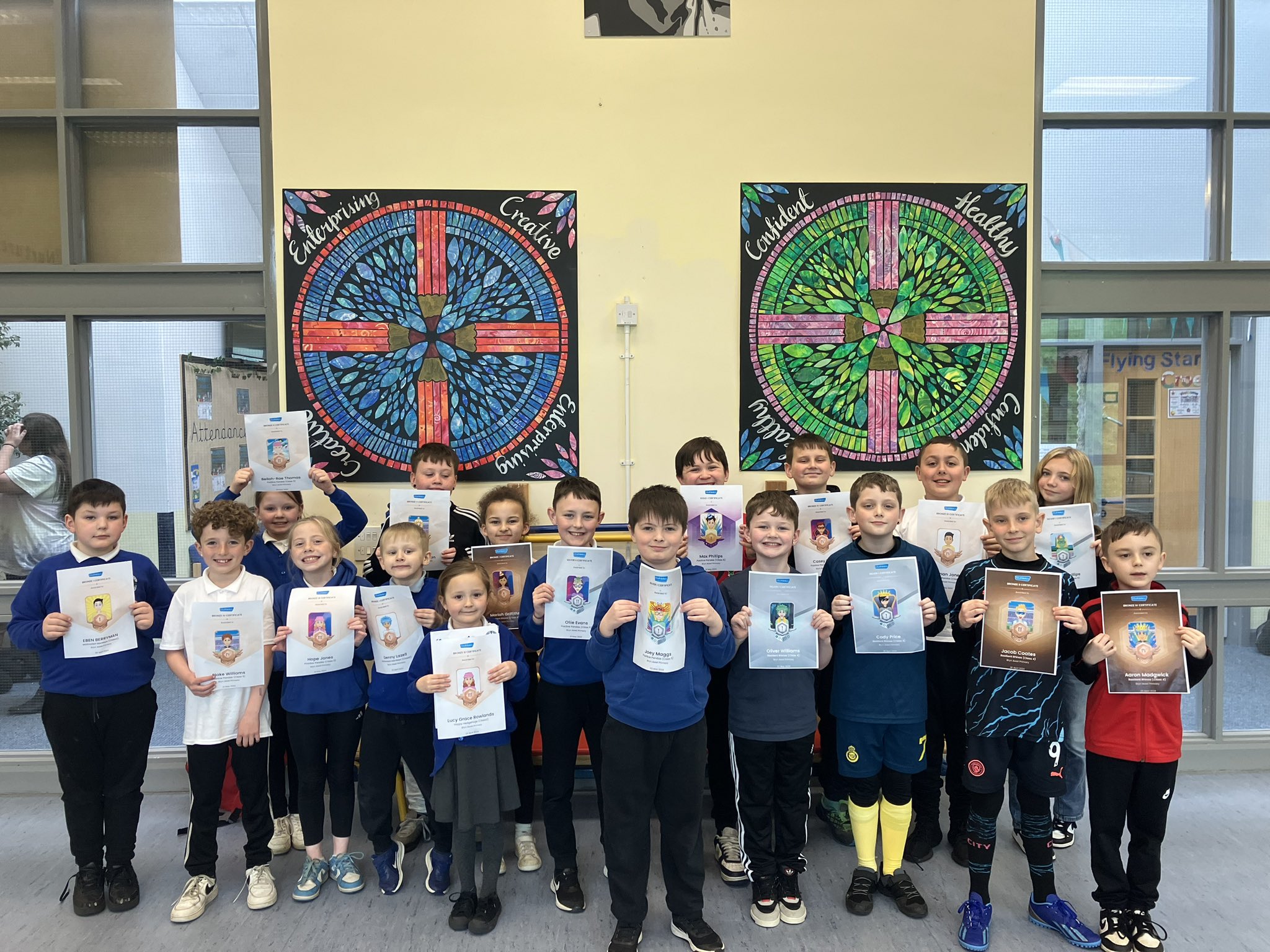
Bryn Awel Primary has become a model example of how to turbocharge student (and parent) engagement with Mathletics, making the most out of built-in motivators like student certificates.
Every Friday, the entire school gathers to announce the class of the week and the Mathlete of the week – recognitions based on Mathletics effort and achievement. It’s transformed how students approach maths both in the classroom and at home.
The competitive element has sparked enthusiasm even among the youngest learners.
“I’ve never had such good uptake from my Reception as I’ve had in the last couple of weeks. I’m like, ‘Come on boys and girls, we’re going to be the class of the week!’ And parents are so competitive with that.”
This all happens in a context where parental engagement can be challenging – and suddenly, parents have become the biggest supporters of their children’s successes.
“We love the fact that we can do it in school and the children want to do it at home because we’re in an area where the children can be challenging and parenting could be an issue,” Anna says.
“It’s not about all these parents having to win. The children want to do it, and their engagement is perfect, really.”
The students love the challenging gaming elements – again, Anna emphasises that word “love” when she talks about it. And because Mathletics allows teachers to differentiate easily, tapping into year groups above or below as needed, every child can work at the right level to build those essential building blocks.
As proof, Anna told us a moving story about a student with additional learning needs who normally hates assembly – but Friday assemblies are different. “He will love Mathletics on Friday assembly. He will come in because he knows he’s been working hard all week in class and at home to get a certificate,” Anna explains.
“For us it’s the greater issue than just maths. It’s that self-esteem and that self-recognition of ‘I can do it.’ He might not be the best at maths in the class, but he’s got the best effort in the class when it comes to Mathletics.”
Teacher wellbeing matters: How Mathletics lightens the load
Ask about planning and resources, and Anna has plenty to say, which could be summed up in one sentence: Mathletics makes teachers’ lives easier.
Anna demonstrated the program’s resources at a staff meeting, showing teachers the problem-solving materials and other tools available.
“When we saw all the other resources that they have, especially around problem solving – it’s just great for the teachers. We love it.”
The fact that it covers both English and Welsh curricula matters too, particularly in a school where staff may have taught across the border.
“You’ve got the English curriculum, you’ve got the Welsh curriculum, and that’s a great feature.”
Then Anna gets to the heart of it: “And for the wellbeing of teachers – and that’s the buzzword at the moment, isn’t it? The wellbeing of everybody. It really does make our lives easier.”
In a profession where teachers are asked to do more with less, a resource that reduces planning burden is worth holding onto.
“It’s filling the gaps for us”: Student progress visible at a glance
One of Mathletics’ most valuable features for Bryn Awel is the clear visibility it provides into student progress. The school regularly checks activity and usage reports, achievement and improvement data and compares class usage, particularly when it comes to certificates.
“When you can look at that grid, you can see – right, they’ve done that three times, but now they’ve got 100%,” Anna explains.
“You can highlight what they need to work on because if they haven’t quite got this, we need to work on that. It’s filling the gaps for us.”
Perhaps more importantly, Mathletics provides an honest assessment of what children can actually do.
“We know time after time that children do not always perform the best on written assessments or the national tests or SATs in England. But when this is at their own leisure, it’s not under pressure – they love doing it, it’s fun – so you can see an honest review of what these children can do and what maybe we need to plug the gaps with, especially as they move through the school.”

The verdict from Bryn Awel Primary: Mathletics isn’t going anywhere
As Bryn Awel Primary looks to the future, Mathletics remains a constant.
“We really, really do love Mathletics,” Anna says. “We love the way that it’s not only boosting the fluency skills, it’s boosting parental engagement. So parents know what we’re doing in school. And we can assign tasks at home for the wellbeing of staff – here is a quality resource to provide, not only within their lesson time, but also for homework as well.”
The digital element matters too, particularly for this generation of learners. “We’re big on our digital side and we know that’s the key to the door of many of these children’s minds – tapping into their love of tech. So we love that too.”
Anna sums up Mathletics’ impact with one final “love”:
“It’s inspiring [students] to do well with their constant rewards, their drive to get their certificates, the challenges and quests. We love it, and yes, we would recommend it.”
For schools facing similar budget pressures and engagement challenges, Bryn Awel Primary’s experience offers a clear lesson: when a resource supports both student learning and teacher wellbeing, it’s worth protecting.
Try our engaging, curriculum-aligned maths program in your school
Mathletics (Years R–KS3) is a proven online maths program, designed to fuel genuine student engagement while freeing up teachers’ time through readily available resources, reliable progress tracking, streamlined assignments and more. Start your free 30-day trial today!