Artemis 2 astronauts spy the Milky Way photo of the day for April 8, 2026

What is it?
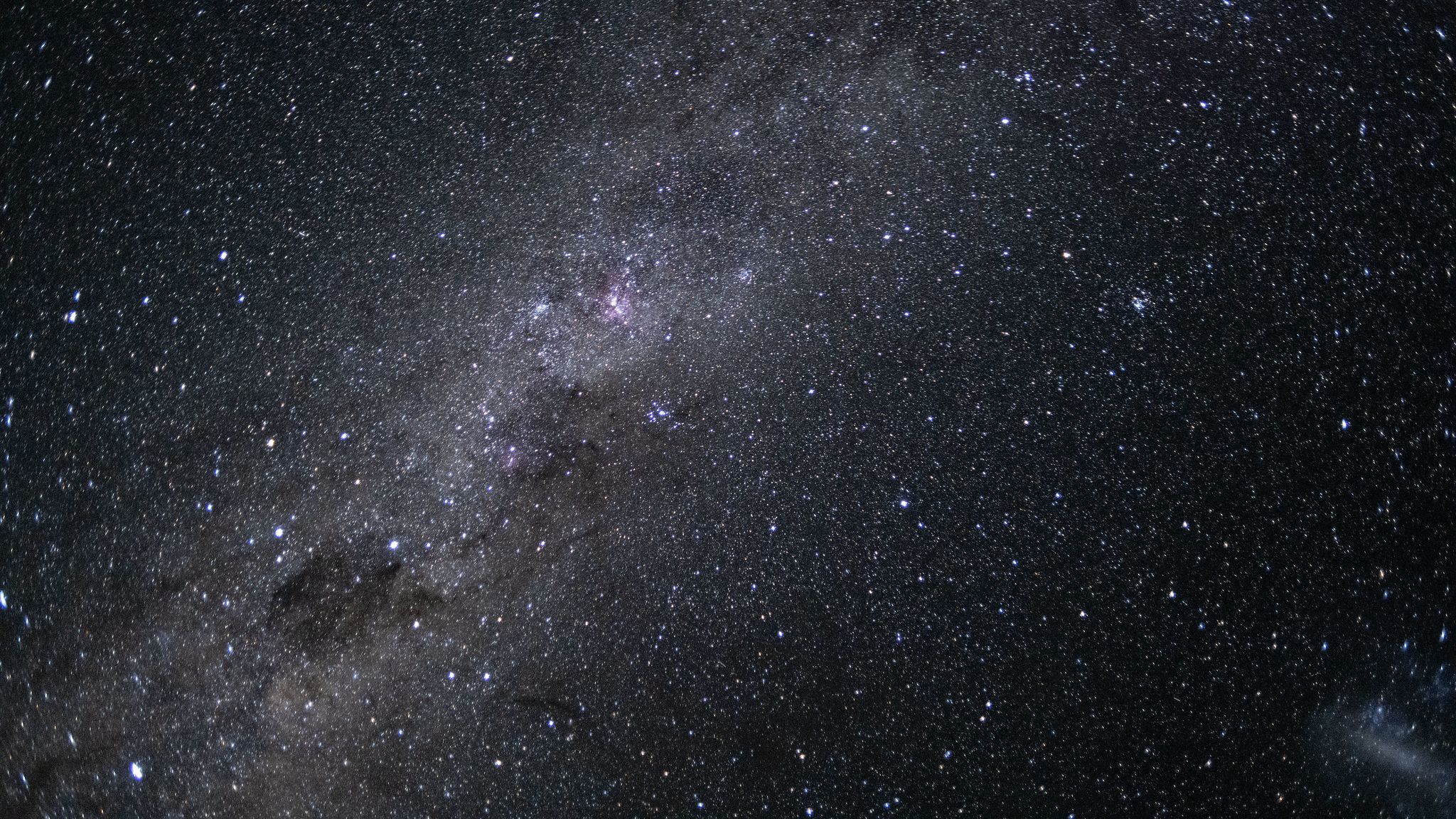
A river of shining stars and dusty filaments marks the galactic plane of the Milky Way — the colossal galaxy that we call home. This particular view of our host galaxy doesn’t look directly towards the core, but rather into one of its spiral arms, where countless deep-space objects areshining against the blackness of space.
Why is it amazing?
The pink cloud at the center of the shot is the Homunculus Nebula, a vast glowing structure of interstellar dust and gas 7,500 light-years from Earth, according to NASA, created in the wake of a cataclysmic eruption of the double star system Eta Carinae.
Article continues below
Star clusters and dimmer nebulas are visible threaded through the galactic plane, while the Large Magellanic Cloud — a satellite galaxy of the Milky Way — appears as a hazy patch of light to the bottom right of the shot.
From space, the crewmember who captured the image was blissfully free of the atmospheric interference that usually comes hand in hand with capturing the glowing band of the Milky Way. However, a slight blurring of stars at the edge of the frame seems to betray the subtle motion of the spacecraft — or camera — over the course of the 10-second exposure.
When was it taken?
The image was captured less than a day after NASA astronauts Reid Wiseman, Victor Glover and Christina Koch, and the Canadian Space Agency’s Jeremy Hansen executed a historic flyby of the lunar surface that took them farther from Earth than any human before them.
Over the coming days, the Artemis 2 crew will perform a series of course correction burns to finesse their trajectory as they journey back to Earth, before finally splashing down in the Pacific Ocean off the coast of San Francisco at the culmination of their 10-day space odyssey.
Want to know more? Then be sure to stay up to date with the latest news with our Artemis 2 liveblog and to check out our Artemis program reference page for answers to all of your Artemis questions as NASA and its partners look to establish a sustainable presence on the moon.